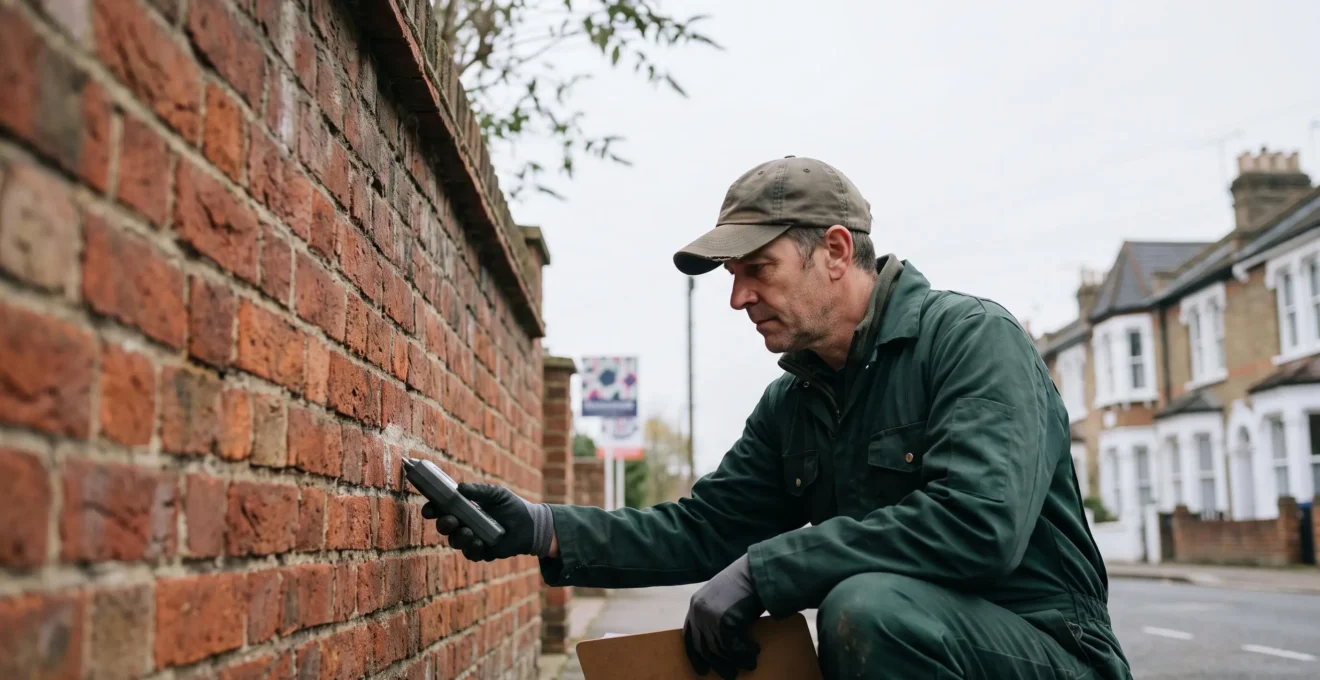
A professional property survey is not an optional expense; it is your primary financial defence against costly hidden defects that aesthetic viewings will never reveal.
- It translates invisible structural liabilities like damp, subsidence, and faulty wiring into tangible negotiation power.
- It systematically uncovers issues that, according to industry data, can cost an average of over £13,000 to rectify.
Recommendation: Treat the survey report not as a pass/fail document, but as a strategic roadmap for price negotiation and future financial planning.
For many UK buyers, the property viewing is a process driven by emotion. You fall in love with the period features, the newly fitted kitchen, or the sun-drenched garden. This reliance on aesthetics is what I call the ‘Aesthetic Fallacy’—a dangerous assumption that what you see is what you get. The reality is that beneath the fresh coat of paint and clever staging, a property can hide significant, costly problems. Issues like subtle structural movement, creeping damp behind furniture, or an outdated electrical system are invisible to the untrained eye but represent significant future financial liabilities.
The common advice is simply to “get a survey,” but this often misses the crucial point. A survey is not merely a box-ticking exercise. It’s a comprehensive financial diagnostic. Its purpose is to uncover these invisible liabilities and quantify their potential cost, transforming a vague sense of risk into concrete data. While you might focus on negotiating a few thousand pounds off the asking price based on market comparisons, a surveyor is focused on identifying defects that could cost you £15,000 or more in unexpected repairs post-completion. This article will deconstruct how professional inspections achieve this, moving beyond the superficial to give you the leverage you need to make a sound investment.
This guide, written from the perspective of a chartered surveyor, will walk you through the critical distinctions between a lender’s valuation and a buyer’s survey, explain how to leverage findings for negotiation, and detail exactly what you should expect from a professional inspection. By understanding the process, you protect your finances from catastrophic surprises.
Contents: How a Survey Protects Your Property Investment
- Why Doesn’t Your Mortgage Valuation Protect You From Structural Defects?
- How Do You Negotiate Price Reductions After a Survey Uncovers Major Defects?
- RICS-Qualified or Independent: Which Property Inspector Should UK Buyers Trust?
- The Follow-Up Failure: Why General Surveys Require Specialist Inspections for Damp or Electrics
- When Should You Survey a Property Before Making an Offer in Hot UK Markets?
- RICS Level 2 or Level 3:What Must First-Time Buyers in the UK Verify Before Making an Initial Purchase Offer?
- How Do You Address Defects Before Surveys to Prevent Transaction Collapse?
- What Should UK Buyers Expect From Professional Property Inspections That Cost £600-£1,200?
Why Doesn’t Your Mortgage Valuation Protect You From Structural Defects?
One of the most dangerous misconceptions among UK property buyers is that the mortgage valuation report offers them a safety net. It does not. You must understand that this report is commissioned by the lender, for the lender. Its sole purpose is to confirm that the property provides sufficient security for the loan amount. It is not an assessment of the building’s condition for your benefit. The valuer might only perform a brief “drive-by” or even a desktop assessment, never setting foot inside the property. They are not looking for damp, woodworm, or hairline cracks that could signify structural movement.
This distinction is not a subtle industry secret; lenders are explicit about it. For example, guidance from Barclays Intermediaries states unequivocally:
Neither the Valuer nor Barclays accept any responsibility or liability to you or other parties in connection with the Valuation report even if the report contains errors, omissions or inaccuracies.
– Barclays Intermediaries, A Guide to Mortgage Valuations
This single sentence underscores the reality: if the valuation misses a £20,000 roof repair, the financial burden is entirely yours. An independent survey, commissioned by you, is the only report that works in your interest. It provides a detailed account of the property’s condition, flagging defects and advising on necessary repairs. This difference in purpose and scope is the fundamental reason why relying on a mortgage valuation is a high-stakes financial gamble.
This table, based on information from the Homeowners Alliance, clearly illustrates the critical differences in scope.
| Aspect | Mortgage Valuation | Independent House Survey (Level 2/3) |
|---|---|---|
| Who it protects | The lender | The buyer |
| Who commissions it | The mortgage lender | The buyer |
| Physical inspection | Often none — can be a desktop or drive-by check | In-depth on-site inspection lasting several hours |
| Report length & access | Typically only 2–3 pages; buyer may never see it | Detailed multi-section report supplied directly to the buyer |
| Purpose | Confirms the property is sufficient security for the loan | Assesses condition, flags defects, and advises on repairs/maintenance |
How Do You Negotiate Price Reductions After a Survey Uncovers Major Defects?
Receiving a survey report detailing significant defects can be disheartening, but it should be viewed as a financial opportunity. This report is your primary tool for renegotiating the purchase price. The key is to approach the negotiation professionally and with clear evidence. You are not simply asking for a discount; you are presenting a rational case that the property’s value is impacted by previously undisclosed liabilities. Your offer was based on the property’s visible condition, and the survey has now revealed its true, underlying state. Therefore, an adjustment to the price is a logical consequence.
Your negotiation should focus on structural or safety-critical defects, not minor cosmetic issues. A loose tile or scuffed paintwork is part of normal wear and tear. Subsidence, a failing roof, dangerous wiring, or extensive damp are material issues that justify a price reduction. As Andrew Boast, CEO of SAM Conveyancing, notes, there’s a recognised scope for this. He states in an article for Homebuilding & Renovating:
Generally, buyers can negotiate a five to 10 per cent reduction after a survey highlights issues, but the actual figure will depend on the severity of the problems.
– Andrew Boast, CEO of SAM Conveyancing, Homebuilding & Renovating
To build your case, the first step is to obtain cost estimates for the remedial work from qualified tradespeople. Presenting the vendor’s estate agent with a copy of the relevant survey section alongside two or three quotes makes your request objective and difficult to dismiss. You are not plucking a figure from the air; you are demonstrating the real-world cost of bringing the property to the standard you expected. Remember to remain calm and factual. The negotiation is a business transaction, not a personal confrontation. The seller may not agree to the full amount, but a well-evidenced request provides a powerful basis for a fair compromise.
RICS-Qualified or Independent: Which Property Inspector Should UK Buyers Trust?
In the UK, the property survey market includes a wide range of providers, but for maximum protection, a buyer’s trust should be placed in a surveyor regulated by the Royal Institution of Chartered Surveyors (RICS). RICS is the globally recognised professional body for standards in property, land, and construction. A RICS-regulated firm is bound by a strict code of conduct, must hold adequate Professional Indemnity (PI) insurance, and has a formal complaints-handling procedure. This regulatory framework provides a crucial layer of accountability and consumer protection that an unregulated “independent” surveyor may not offer.
While any experienced individual can offer a survey, the RICS designation ensures a recognised standard of training, ethics, and competence. RICS itself is actively working to make this distinction clearer for consumers, enhancing its “Find a Surveyor” tool to prioritise regulated firms. This move is designed to build confidence by ensuring that anyone you find through their official portal meets these high standards. When instructing a surveyor, you are not just buying a report; you are buying the peace of mind that comes with proven expertise and professional accountability. The PI insurance, for example, protects you financially if the surveyor is negligent and misses a significant defect that later costs you money.
Choosing the right surveyor is as important as choosing the right survey level. An experienced local RICS surveyor will have invaluable knowledge of common property types and issues in the area, such as specific soil types prone to subsidence or prevalent construction methods from a certain era. Before committing, you should always verify their credentials and understand what you will receive.
Your Checklist for Choosing the Right Surveyor
- Check that the firm is RICS-regulated on the official RICS website before instructing them, as not every publicly listed firm is a regulated body.
- Ask what level of Professional Indemnity insurance the surveyor holds before committing to ensure you are adequately protected.
- Request a sample report for a similar property type so you can understand the format and level of detail you will receive in advance.
- Confirm the surveyor has considered the age, size, and condition of the property to advise on the most appropriate survey type for your needs.
- Discuss any specific concerns you have about the property with the surveyor beforehand so they can pay special attention to those areas during the inspection.
The Follow-Up Failure: Why General Surveys Require Specialist Inspections for Damp or Electrics
A common point of frustration for buyers is when a survey report flags an issue with the recommendation: “further investigation is required.” This is not a failure of the survey; it is a mark of a diligent and responsible surveyor. A RICS surveyor is a generalist practitioner, an expert in building pathology overall, but they are not a qualified electrician, gas engineer, or structural engineer. When they identify potential issues in these specialist areas—such as suspected active damp, an old-looking fuse box, or complex cracks—it is their professional duty to recommend an expert assessment. Ignoring this recommendation is a significant mistake known as the ‘follow-up failure’.
The surveyor’s report provides the red flag; the specialist report provides the detailed diagnosis and costed solution. For example, a surveyor might use a moisture meter to detect high readings in a wall, indicating damp. However, a specialist damp and timber report will determine the exact cause (e.g., rising damp, penetrating damp, or condensation), specify the necessary treatment (e.g., a new damp-proof course or external repairs), and provide a quote. Similarly, a surveyor will visually inspect the electrics, but only an Electrical Installation Condition Report (EICR) conducted by a qualified electrician can confirm if the system is safe and compliant with current standards.
Case Study: What Happens When a Survey Uncovers Significant Defects
When a survey uncovers significant defects, buyers have a clear path forward. Some may choose to proceed, especially if they were seeking a ‘fixer-upper’ and had budgeted for renovations. However, for most, the report is a critical negotiation tool. If the defects were not previously disclosed, the buyer can use the findings to renegotiate the price, typically in line with the urgency and cost of the required work. This transforms the survey from an expense into a powerful investment in financial protection.
These specialist reports are not an unnecessary expense; they are an essential part of your due diligence. Failing to act on a recommendation for further investigation means you are knowingly accepting an unquantified risk. Indeed, industry figures show that the average cost of repairing structural damage is more than £13,000, a figure that directly validates the financial prudence of investing a few hundred pounds in a specialist report to understand the full scope of a problem before you are legally committed to the purchase.
When Should You Survey a Property Before Making an Offer in Hot UK Markets?
In the property system used in England and Wales, the standard practice is to make an offer, have it accepted, and then commission a survey. However, in a highly competitive or “hot” market, this can lead to wasted time and money if the survey uncovers major issues, forcing you to withdraw your offer and lose your survey fee. This has led some buyers to consider a more proactive approach: commissioning a survey *before* making an offer. While this means spending money with no guarantee of securing the property, it allows you to make a fully informed offer from the outset, potentially including the cost of necessary repairs in your initial bid.
This pre-offer approach can be a powerful strategy, particularly for properties that show obvious signs of neglect or for auction properties where post-offer due diligence time is limited. It provides you with ultimate clarity and negotiation power. The main drawback is the risk of being outbid, but for a serious buyer, the few hundred pounds spent on a survey can prevent a multi-thousand-pound mistake. It is a calculated risk that prioritises financial safety over potential loss of the survey fee.
Interestingly, this “buyer-beware” system is not the only model in the UK. The Scottish system offers a different approach that provides greater transparency upfront. In Scotland, sellers are legally required to provide a Home Report to prospective buyers before they even make an offer. This report includes a single survey, a property questionnaire, and an energy report, giving all interested parties access to the same baseline information on the property’s condition from the very first viewing. This fundamental difference highlights the value of having condition information early in the process.
The table below compares the two systems, showing the distinct advantages of the upfront transparency mandated in Scotland.
| Aspect | Scotland | England & Wales |
|---|---|---|
| Who commissions the survey | The seller, before marketing | The buyer, after an offer is accepted |
| Legal requirement | Mandatory before the property is marketed | Optional, buyer’s own choice |
| What’s included | Single survey and valuation, property questionnaire, and energy report | Varies by survey level chosen (Level 1, 2 or 3) |
| Timing advantage | Available to all buyers from first viewing | Typically only obtained after an offer is accepted, unless requested pre-offer |
RICS Level 2 or Level 3:What Must First-Time Buyers in the UK Verify Before Making an Initial Purchase Offer?
For first-time buyers, navigating the different types of surveys can be confusing. The two most common choices are the RICS Home Survey Level 2 (often called a HomeBuyer Report) and the RICS Home Survey Level 3 (often called a Building Survey). Making the right choice is critical, as it determines the depth of the inspection. The key is to match the survey level to the property’s age, type, and condition. Choosing an inadequate survey level is a false economy that can leave you exposed to significant risk.
A Level 2 survey is suitable for conventional properties built from common materials and in a reasonable state of repair. It uses a “traffic light” system (red, amber, green) to rate the condition of different elements of the property and is less intrusive than a Level 3. Budgeting guides note that a Level 2 survey typically costs between £400 and £700, depending on the property’s size and location. It will identify most common defects like obvious damp or roof problems but will not involve disruptive inspection methods like lifting floorboards.
A Level 3 survey is the most comprehensive inspection you can get. It is essential for older properties (typically pre-1950), those of unusual construction, or any property that is visibly in poor condition or has been significantly altered. It is also the right choice if you are planning major works yourself. The surveyor will provide a much more detailed analysis of the building’s structure and fabric, offering advice on defects, repairs, and maintenance options. While more expensive, the depth of a Level 3 survey can uncover complex issues that a Level 2 might miss, providing the detailed information needed for negotiating on a property requiring substantial work.
Before even deciding, first-time buyers can perform free checks. Using the local council’s online planning portal to check for past applications can reveal a history of extensions or alterations, which might push you towards a Level 3 survey. Similarly, checking the UK Environment Agency’s flood map for the postcode is a zero-cost step that can flag a significant risk factor from the outset.
How Do You Address Defects Before Surveys to Prevent Transaction Collapse?
While this guide is for buyers, understanding the seller’s legal obligations and mindset provides a strategic advantage. A knowledgeable buyer knows what a seller must disclose and can identify when information is being withheld. In England and Wales, sellers complete a Property Information Form (TA6), where they are legally required to disclose known issues, including disputes, planning notices, and past structural problems like subsidence. Dishonest answers on this form can lead to legal action by the buyer after the sale has completed.
A savvy seller will be upfront about any known defects, ideally providing a structural engineer’s report and evidence of repairs for past issues. This transparency builds trust and prevents the transaction from collapsing weeks down the line when the buyer’s survey inevitably uncovers the problem. A buyer should be wary of a seller who is evasive or denies access to certain areas of the property. For a buyer, the TA6 form is a crucial document to review with your solicitor, comparing its disclosures against your survey’s findings. Any discrepancies are a major red flag.
The psychological impact of discovering a major defect like subsidence cannot be overstated. As a buyer, you should be aware of this leverage. Research from HomeSellingExpert.co.uk found that the vast majority of buyers would be put off by a history of subsidence. This sensitivity means that a seller with a known but undisclosed issue is in a very weak negotiating position once your survey brings it to light. Rather than being a deal-breaker, this is where your survey becomes your most powerful tool, allowing you to either walk away with your finances intact or negotiate a substantial price reduction that reflects the property’s true risk and condition.
Key takeaways
- A mortgage valuation protects the lender, not you; it is not a structural assessment.
- Survey findings are negotiation tools; a 5-10% price reduction is a realistic target for major defects.
- Always use a RICS-regulated surveyor and request a sample report to verify their quality.
- Be prepared to commission specialist reports (e.g., for damp or electrics) as a follow-up to the main survey.
What Should UK Buyers Expect From Professional Property Inspections That Cost £600-£1,200?
A professional property inspection, typically costing between £600 and £1,200 for a Level 2 or 3 survey, is a systematic process of defect detection. For this investment, you should expect a detailed, multi-page report that serves as your personal guide to the property’s health. The surveyor will conduct a non-invasive visual inspection of all accessible parts of the property, from the roof down to the drains. They are looking for signs of trouble that a layperson would miss: the subtle bulge in a wall, the musty smell of dry rot in a cupboard, or the outdated rubber-sheathed wiring in the loft. They use their experience and tools like moisture meters and binoculars to build a picture of the building’s condition.
Despite the clear value, it is alarming how many buyers forgo this protection. Shockingly, RICS data suggests that less than 20% of buyers have a survey completed on their new home. This means four out of five buyers are potentially exposing themselves to thousands of pounds in unforeseen repair costs, all to save a few hundred pounds upfront. It is a classic case of being “penny wise and pound foolish.” The survey fee is not a cost; it is an investment in risk mitigation. As a case study from Easton Bevins surveyors highlights, the money spent on a survey can save thousands, as most clients use the report’s findings in negotiations with the vendor, and the resulting price reduction can more than cover the survey’s cost.
Ultimately, you should expect the report to give you the confidence to either proceed with the purchase, renegotiate from a position of strength, or walk away from a potentially disastrous investment. It replaces emotion and guesswork with objective, expert analysis. It is the single most important piece of due diligence you will conduct in the entire home-buying process, and it provides a clear, tangible return on investment by protecting you from the costly unknown.
Before you commit to what could be the biggest purchase of your life, the next logical step is to commission a professional RICS survey to fully understand the financial realities of the property you are considering.
Frequently asked questions about UK Property Surveys
When should I choose a Level 2 survey over a Level 3?
A RICS Home Survey Level 2 is suitable for conventional properties in reasonable condition. A Level 3 Building Survey is strongly recommended for properties that are older, have been significantly altered or extended, are constructed from unusual materials, or if you are planning to undertake major works yourself.
What should I do if my survey recommends a specialist report?
You should always follow this recommendation. The survey has identified a potential high-risk issue that requires expert diagnosis. Common specialist reports include those from a structural engineer (for cracks/movement), a damp and timber specialist, a heating engineer (for the boiler and system), or a qualified electrician for an Electrical Installation Condition Report (EICR).
How can I use the survey findings before making an offer?
In a competitive market, commissioning a survey before offering can be a powerful strategy. It allows you to make an offer that is fully informed by the property’s condition. You can use the findings and repair quotes to justify a lower initial offer, or simply give you the confidence to bid aggressively, knowing there are no major hidden costs. It’s a way to turn due diligence into a competitive advantage.