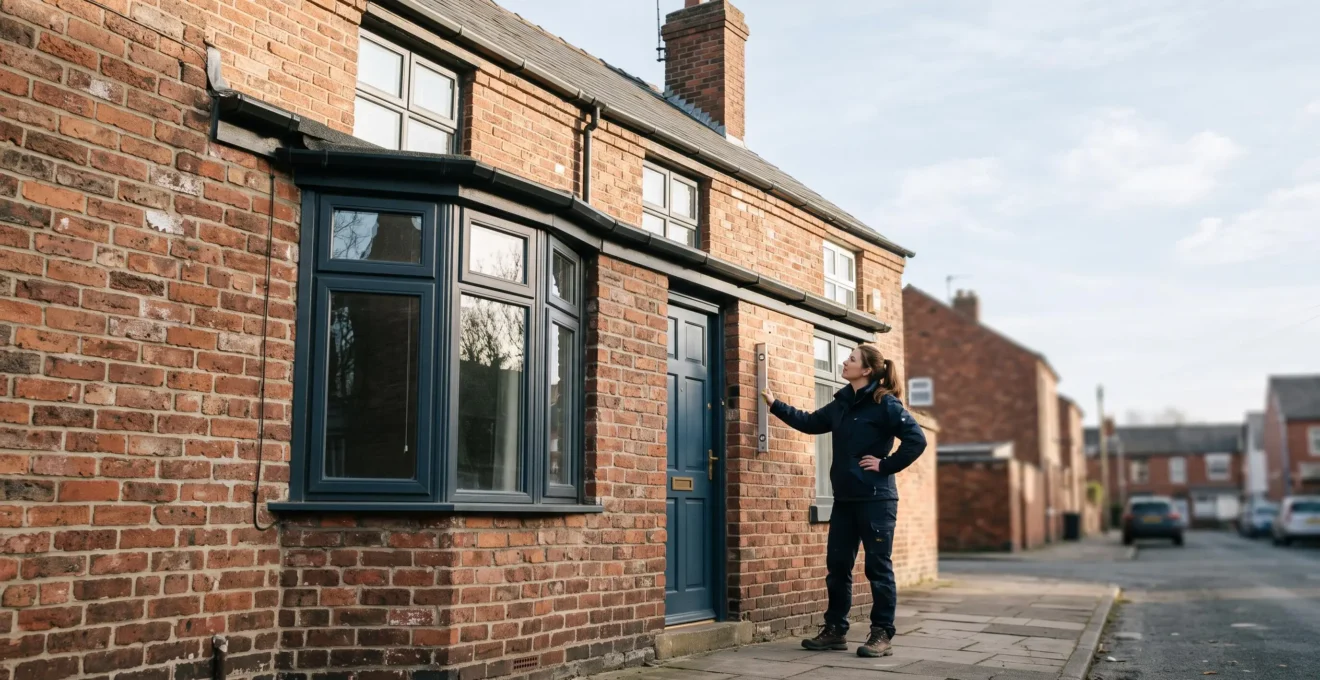
A professional property survey isn’t a simple pass/fail certificate; it’s a strategic diagnostic tool you must actively manage to protect your investment.
- Standard reports have intentional “scope blind spots” that leave buyers exposed if not understood.
- Your physical presence and prepared input during the inspection can fundamentally transform its value and findings.
Our Recommendation: Treat your surveyor’s report as the start of a diagnosis, not the final word. The real value lies in how you use its findings to investigate further and negotiate.
The moment you decide to buy a property in the UK, a familiar piece of advice echoes from all corners: “get a survey.” For a fee that can range from £600 to over £1,200, a qualified professional will inspect your prospective home and deliver a report. Many buyers treat this as a simple box-ticking exercise, a hurdle to clear before exchanging contracts. They commission the report, receive a PDF detailing condition ratings, and assume their due diligence is complete. This passive approach is a significant missed opportunity and misunderstands the fundamental purpose of a survey.
Crucially, a property survey is not the same as the mortgage valuation report your lender commissions. The lender’s valuation is a risk assessment for their benefit, confirming the property is adequate security for the loan. It is not a detailed inspection of the building’s condition for your benefit. The real power of a professional RICS (Royal Institution of Chartered Surveyors) survey lies not in the document itself, but in how you, the buyer, use it as an active diagnostic tool. It’s about understanding its limitations, directing the surveyor’s focus, and leveraging its findings to gain financial control.
This guide reframes the survey process. We will move beyond the simple definitions of Level 2 or Level 3 reports. Instead, we will equip you with the strategic mindset of an ‘inspection co-pilot,’ showing you how to actively participate in the process to uncover potentially thousands of pounds in hidden defects. You will learn what surveys deliberately don’t cover, how to choose the right specialist for the property type, and why your attendance on the day is the single most valuable action you can take.
To navigate this crucial stage of your property purchase, this article breaks down the key strategic considerations. The following sections will guide you through understanding the scope, choosing your expert, and actively participating in the inspection to maximise its value.
Contents: A Strategic Approach to UK Property Inspections
- What Don’t RICS HomeBuyer Reports Cover That Buyers Assume They Do?
- How Do You Choose a Surveyor Who Specialises in Victorian Terraces vs Modern Flats?
- When Should Your UK Property Survey Include Drone Roof Inspections?
- The Missed Opportunity: Why UK Buyers Should Attend Their Own Property Surveys
- When Should You Commission Specialist Damp, Electrical, or Structural Reports After Your Survey?
- RICS-Qualified or Independent: Which Property Inspector Should UK Buyers Trust?
- RICS Level 2 or Level 3:What Must First-Time Buyers in the UK Verify Before Making an Initial Purchase Offer?
- How Do Professional Property Inspections in the UK Uncover £15,000 of Hidden Defects Before You Exchange?
What Don’t RICS HomeBuyer Reports Cover That Buyers Assume They Do?
One of the biggest expectation gaps for UK buyers lies in what a standard RICS survey, particularly the popular Level 2 HomeBuyer Report, intentionally excludes. It is not an exhaustive forensic investigation, but a visual, non-invasive inspection. Understanding these “scope blind spots” is the first step in managing your risk. The primary limitations are a direct function of the survey’s cost and methodology; a report for which most Level 2 surveys are priced at £400-£700 cannot include destructive testing or specialist analysis.
A surveyor will not, for instance, force open the fabric of the building. This means they will not lift fitted carpets, move heavy furniture, or cut into plasterboard to see what lies beneath. The inspection is limited to what is visible and accessible. If an attic is full of the seller’s possessions, the inspection of the roof structure will be partial. This is a critical point: a ‘clear’ report might simply mean that potential problems were hidden from view.
Furthermore, the survey does not test the safety or efficiency of services. While the surveyor will visually inspect and comment on the presence and apparent condition of plumbing, wiring, and heating systems, they are not a qualified electrician or gas engineer. They will not carry out functional tests. The report may recommend “further investigation” by a specialist, which is a crucial directive many buyers overlook. Essentially, the survey is designed to flag potential risks, not to provide a definitive diagnosis or a quotation for repairs.
How Do You Choose a Surveyor Who Specialises in Victorian Terraces vs Modern Flats?
All RICS-qualified surveyors meet a professional standard, but not all have the same niche expertise. Choosing the right surveyor is less about finding the cheapest quote and more about matching their specific experience to the property’s age and construction type. A surveyor whose daily work involves modern new-build estates may not have the same depth of knowledge regarding the common issues of a 19th-century stone cottage, such as historic damp, lime mortar, or unique structural quirks.
Your first step is to actively shop around. Do not automatically accept the surveyor recommended by the estate agent, as their primary relationship is with the seller. Instead, seek out independent local firms and specifically ask about their experience with properties like the one you’re buying. For a Victorian terrace, ask if they are familiar with issues like timber decay in suspended floors or historic roof spread. For a modern flat, inquire about their experience with cladding systems, communal service charges, or fire safety regulations.
Vetting their credentials is non-negotiable. Ensure they are currently regulated by RICS or are a member of the Residential Property Surveyors Association (RPSA). This provides a layer of accountability and recourse. A proactive conversation before you instruct them is invaluable. Discuss any specific concerns you have from your viewings—a strange smell, a crack you noticed, or your future renovation plans. A good surveyor will welcome this input as it helps them focus their inspection. The value of this specific expertise can be immense, as one homebuyer noted after a detailed survey:
A client described how a detailed Level 3 building survey “made us aware of issues that we’d otherwise never have noticed”, leading them to pull out of a purchase where repair costs would have exceeded their budget.
– Cosey Homes, RICS Home Survey Guide
When Should Your UK Property Survey Include Drone Roof Inspections?
The roof is one of the most critical and expensive elements of a property, yet it is often the most difficult part for a surveyor to inspect thoroughly. Traditionally, a surveyor’s view is limited to what can be seen from the ground with binoculars or from an accessible upper-floor window. If the roof is high, complex, or has limited vantage points, a significant portion can remain uninspected, leaving a major blind spot in your report. This is where commissioning a drone inspection becomes a powerful strategic choice.
A drone inspection should be considered essential in several scenarios. If you are buying a property with a large, complex, or multi-level roof, such as a large detached house or a block of flats. It is also crucial for properties where ground-level access is poor, like terraced houses with no rear access. Any sign of internal water damage or visible external defects like slipped tiles should automatically trigger the consideration of a drone survey for a more detailed look.
The cost-benefit analysis is compelling. While a standard survey may not include it, adding a drone inspection is highly economical compared to traditional access methods. A study of costs shows the average drone roof survey cost is around £200, a fraction of the price of hiring scaffolding, which can easily exceed £1,000 per week. Drones can provide high-resolution images of chimney stacks, flashings, gutters, and hidden roof valleys that are otherwise impossible to see safely, turning a major unknown into a known quantity before you commit to the purchase.
The Missed Opportunity: Why UK Buyers Should Attend Their Own Property Surveys
If there is one single action that can multiply the value of your survey fee, it is attending the inspection yourself. While not all surveyors offer this, many do, and treating the survey as a collaborative walk-through rather than a remote service is a game-changer. The written report, however detailed, is a static document. Being present allows you to have a dynamic conversation with the expert on-site, ask questions in context, and gain a real-world understanding of the issues flagged.
Attending transforms abstract report comments into tangible observations. A note about ‘minor damp’ becomes a real patch of wall the surveyor can show you, explaining whether it’s a trivial condensation issue or a sign of a more serious penetrating damp problem. You can point out your specific concerns and watch as the surveyor investigates them. This is also your chance to understand the severity of defects. A surveyor can verbally explain which ‘red’ rated items are genuine £10,000 problems and which are relatively simple fixes, providing nuance that a written report struggles to convey.
This active participation is directly linked to financial benefit. Research shows that roughly one in three home buyers who invested in a house survey went on to save money as a result, either by renegotiating the price or having the seller fix issues. Being present gives you the direct knowledge and confidence to have these negotiations. To make the most of this opportunity, you must prepare.
Your Action Plan: Preparing the Surveyor’s Brief
- Find and hire a surveyor who is forthcoming and confirms in advance that you can attend at least the end of the inspection.
- Before the survey, write down a ‘concerns brief’ listing specific worries, such as renovation plans, unusual smells from viewings, or visible cracks.
- Share this brief with the surveyor at the start of the walk-through to help them prioritise your specific concerns.
- During the walk-through, ask the surveyor to talk you through major findings on-site rather than waiting for the written report.
- Use this time to ask which flagged issues are genuine deal-breakers versus minor cosmetic points that you can manage.
When Should You Commission Specialist Damp, Electrical, or Structural Reports After Your Survey?
A RICS Home Survey report is rarely the final word; it is a high-level diagnostic designed to identify areas that require deeper investigation. The key to unlocking its value is to understand and act upon its recommendations, especially when specialist reports are advised. The RICS traffic light system is your primary guide: Condition Rating 1 (Green) means no action needed, but Ratings 2 (Amber) and 3 (Red) are explicit triggers for your next steps.
A Condition Rating 3 (Red) signifies a serious defect that needs urgent repair, replacement, or investigation. If your report flags a ‘red’ issue for the roof, electrics, or evidence of structural movement, you must commission a specialist report before proceeding. This is non-negotiable. For example, a Red rating on electrics means you need a qualified electrician to perform an Electrical Installation Condition Report (EICR). A Red rating on structural movement requires a structural engineer’s report.
A Condition Rating 2 (Amber) indicates defects needing repair but not considered urgent. While less severe, these can still be costly. If multiple ‘amber’ issues are related—for instance, damp patches in several rooms—it is wise to get a specialist damp and timber report. The most important trigger, however, is any phrase in the report stating the surveyor “cannot reach a conclusion” or that “further investigation is needed.” Treat this as a red flag. It is the surveyor’s professional way of telling you there is a potential problem outside the scope of their visual inspection that you must investigate further.
RICS-Qualified or Independent: Which Property Inspector Should UK Buyers Trust?
In the UK market, buyers often face a choice between surveyors who are members of the Royal Institution of Chartered Surveyors (RICS) and other ‘independent’ surveyors. While many experienced professionals operate outside RICS, choosing a RICS-regulated firm offers a critical layer of protection and assurance that is difficult to quantify by experience alone. The trust in a RICS surveyor is not just about a brand name; it’s about a mandated framework of accountability.
The single most important element of this framework is Professional Indemnity Insurance (PII). This insurance is designed to protect you, the client, in the event the surveyor is negligent and misses a significant defect that costs you money later on. RICS makes holding adequate PII a mandatory requirement for all its regulated firms. This isn’t just a basic policy; RICS-regulated firms must hold a minimum indemnity level that scales with their turnover, often starting at £250,000. This ensures there is a meaningful financial safety net in place.
An independent, non-RICS surveyor may or may not have this level of cover. While they might be highly experienced, the onus is on you to verify their insurance status, and the terms of their policy may not be as robust. RICS also enforces a formal complaints procedure and professional standards that members must adhere to. This provides a clear path for recourse if you have a problem. When choosing an inspector, your primary concern should be this safety net. You should proactively ask any surveyor, RICS or independent, for written confirmation of their PII limit and ensure the policy is from a reputable insurer. An unwillingness to provide this information should be an immediate disqualifier.
RICS Level 2 or Level 3:What Must First-Time Buyers in the UK Verify Before Making an Initial Purchase Offer?
For first-time buyers, deciding between a RICS Level 2 (HomeBuyer Report) and a Level 3 (Building Survey) can be daunting. It’s a crucial decision that defines the depth of the inspection. The right choice depends entirely on the property’s age, type, and condition, and making the wrong one can mean either overpaying for an inspection or, far worse, under-inspecting a problematic property. The key is to perform a simple ‘property triage’ before you even instruct a surveyor.
A RICS Level 2 HomeBuyer Report is designed for conventional properties in reasonable condition. This typically includes houses and flats built within the last 50-70 years, constructed from common materials (like brick and tile), and without major alterations or obvious signs of disrepair. It provides a surface-level overview and is sufficient for most modern, straightforward purchases. It identifies issues but does not go into deep detail on repair methods or costs.
A RICS Level 3 Building Survey is the most comprehensive inspection available. You must opt for a Level 3 if the property is:
- Older, generally built before 1970.
- Of unusual or non-standard construction (e.g., timber-framed, thatched roof).
- Visibly in poor condition or in need of renovation.
- A listed building.
- Has undergone significant past alterations or extensions.
A Level 3 survey is essential if you are planning any major works yourself. It provides a detailed analysis of the building’s structure and condition, advice on defects, and information on repair options. The table below summarises the key differences.
| Feature | Level 1 (Condition Report) | Level 2 (HomeBuyer Report) | Level 3 (Building Survey) |
|---|---|---|---|
| Best suited for | New, conventional properties in good condition | Conventional properties in reasonable condition, no major alterations | Older, unusual, extended or renovation-bound properties |
| Typical cost | £300 – £900 | £400 – £700 | Higher, varies with size and complexity |
| Repair cost estimates | Not provided | Generally not provided | Included, with detailed advice on repairs |
| Structural investigation | Visual only | Visual only, no opening up of structure | Comprehensive assessment of structure and condition |
Key Takeaways
- A survey is not a pass/fail test; it’s a diagnostic tool with intentional ‘blind spots’ that you must be aware of.
- Your active participation, especially attending the inspection, is the single most effective way to maximise the value of your survey fee.
- The report’s true power lies in its function as a negotiation tool, providing the evidence needed to adjust the price or demand repairs.
How Do Professional Property Inspections in the UK Uncover £15,000 of Hidden Defects Before You Exchange?
The ultimate purpose of investing £600-£1,200 in a property inspection is not just to gain peace of mind, but to gain financial leverage. A detailed survey, especially a Level 3, transforms unknown risks into known liabilities. It provides you with a documented, expert-validated list of defects that can be used to either renegotiate the purchase price or insist the seller rectifies the issues before you exchange contracts. This is how a survey pays for itself many times over.
Consider a common scenario: a Level 3 survey on an older property reveals significant damp in a timber subfloor and a deteriorating chimney stack. These are issues invisible during a typical 30-minute viewing. The surveyor’s report not only identifies these problems but also recommends specialist investigation. You can then obtain quotes from a damp-proofing company and a roofer, which might total £15,000. Armed with the surveyor’s report and these quotes, you now have a powerful, evidence-based case to present to the seller. The £15,000 is no longer a hypothetical future cost; it’s a defined financial reality of purchasing the property in its current state.
This process is remarkably effective. Data from the Homeowners Alliance shows that nearly a third of buyers who had a survey took direct financial action as a result. While some walked away from a bad purchase, 10% successfully renegotiated the price down, and 9% had the seller fix problems before completion. This proactive approach is the difference between inheriting an expensive problem and making a sound investment.
Case Study: Level 3 Survey Uncovers Budget-Breaking Repair Costs
A couple instructed a Level 3 building survey on a prospective purchase; the detailed inspection revealed issues that would never have been noticed otherwise, and the estimated repair costs were far beyond their budget, leading them to withdraw from the sale entirely rather than inherit an expensive problem. This saved them from a potentially disastrous financial commitment.
Armed with this strategic mindset, you can now approach your next property inspection not as a passive hurdle, but as your most powerful due diligence and negotiation tool. The goal is to move from simply ‘getting a survey’ to actively ‘using a survey’ to protect your finances and make a truly informed purchase.
Frequently Asked Questions about Post-Survey Specialist Reports
What happens if my survey report flags a serious issue?
You have several options. You can use the report as leverage to renegotiate the purchase price with the seller, you can ask the seller to fix the issue before you exchange contracts, or, if the problem is severe enough, you can decide to walk away from the purchase entirely.
Should I always trust a specialist recommended by the estate agent?
It is generally safer and more advisable to instruct your own independent specialist. A report commissioned via the estate agent or the seller may not act purely in your best interest, whereas your own specialist has a duty of care directly to you.
Can a poor survey outcome be renegotiated even before ordering a specialist report?
Yes, absolutely. The moment a main survey flags an issue as ‘further investigation required’, it introduces a known risk and uncertainty. This itself can be used as a valid starting point for negotiation with the seller, even before the full cost of the repair is known.