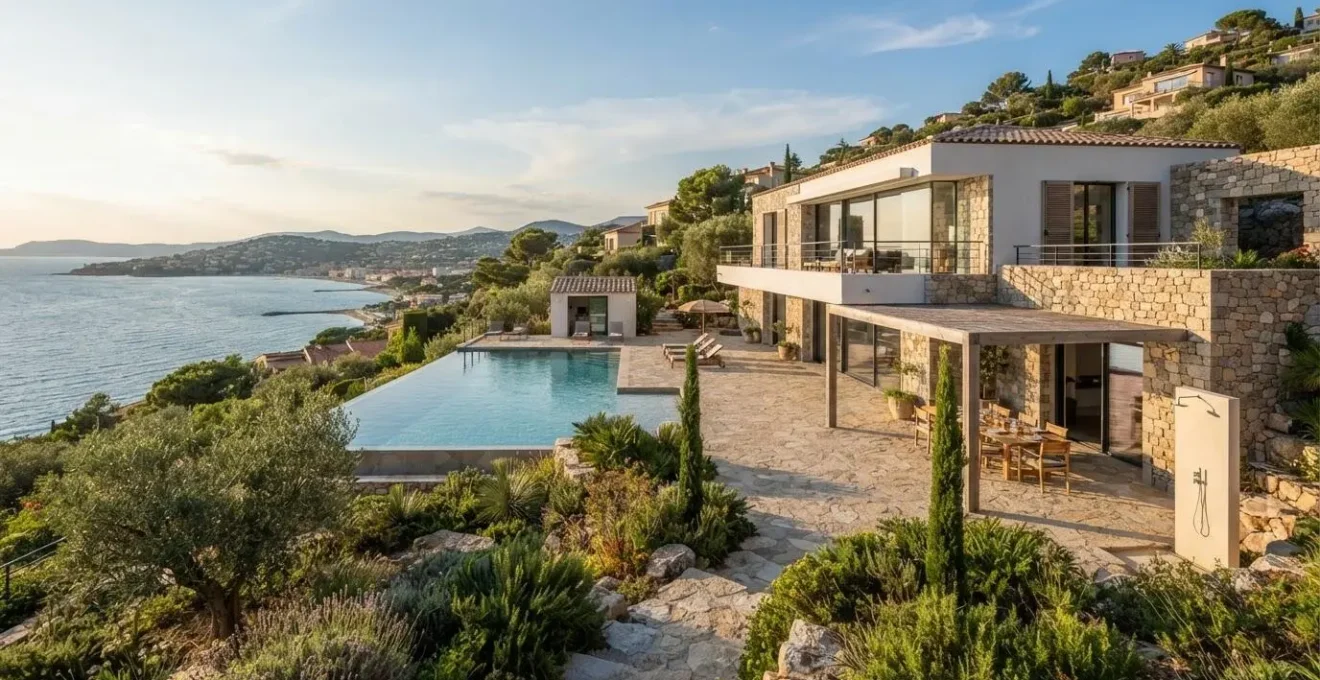
France has reclaimed its crown as the world’s top luxury travel destination, welcoming over 102 million visitors in 2025 and generating a record €77.5 billion in international tourism revenue, according to Atout France‘s 2025 tourism report. Yet behind these impressive numbers lies a quieter revolution: discerning travelers are abandoning crowded hotels for the privacy and personalized service of luxury villa holidays. What sets France apart isn’t just the lavender fields or coastal charm—it’s the full-service villa experience that combines boutique hotel standards with the freedom of your own estate. This summer, four distinct regions offer entirely different expressions of French luxury living, each curated for travelers who refuse to compromise on either authenticity or comfort.
Why France remains the ultimate destination for luxury villa holidays
The numbers tell only part of the story. While neighboring Mediterranean countries compete on sunshine hours and coastline kilometers, France wins on something harder to quantify: the seamless integration of luxury villa holidays into genuine local life. Italy offers romance, Spain delivers value, but France uniquely balances Michelin-starred gastronomy with farmers’ markets, UNESCO heritage sites with hidden village squares, and resort-level service without the resort.
Your French luxury villa destination snapshot
- Île de Ré: Atlantic island sophistication for families seeking cycling culture, oyster farm charm, and car-free exploration with established five-star infrastructure.
- Provence: Cultural immersion for culinary enthusiasts who value working vineyards, historic villages, and authentic market-driven dining over beachfront glamour.
- Dordogne: Medieval valley exclusivity for travelers prioritizing château-dotted landscapes, gastronomic traditions, and genuine escape from international tourism circuits.
- Basque Coast: Athletic elegance combining Atlantic surfing culture, mountain hiking access, and distinctive Basque culinary heritage for active luxury seekers.
What truly distinguishes the French luxury villa market in 2026 is the maturation of full-service offerings that eliminate traditional compromises. The question is no longer whether you can find a beautiful property—rental platforms have solved that puzzle. The real differentiator lies in what happens between booking and checkout: the 24-hour concierge securing fully-booked restaurant reservations, the private chef sourcing from that morning’s market, the housekeeper restocking premium amenities unprompted.
Recent data from INSEE‘s Q2 2025 tourism statistics reveals a telling shift. Premium 4-to-5-star hotels surged by 10.7 percent year-on-year, the sharpest increase across all categories, while holiday short-stay accommodations—encompassing luxury villas—jumped 6.1 percent to reach 23.2 million overnight stays in Q2 2025 alone. Affluent travelers aren’t just choosing France; they’re actively selecting villa experiences over traditional luxury hotels.
The French villa advantage becomes clearer when you consider what’s typically included in a properly curated rental. Minimum standards at reputable agencies start at four bedrooms with ensuite bathrooms, private heated pools, landscaped gardens, and fully equipped outdoor kitchens. But the real value emerges in the invisible infrastructure: pre-arrival consultations that tailor your stay, welcome provisions featuring local specialties, and responsive local teams who treat service failures as personal affronts rather than booking platform ticket numbers.
Île de Ré: Where Atlantic charm meets five-star service
Connected to mainland France near La Rochelle by a graceful bridge, Île de Ré manages what few luxury destinations achieve: accessibility without accessibility’s usual costs. No ferry schedules to navigate, no small aircraft connections, yet the moment you cross onto the island, the pace downshifts into something distinctly removed from continental urgency.
What makes this 30-kilometer Atlantic island particularly compelling for villa holidays is its established luxury infrastructure that predates the recent vacation rental boom. The challenge for travelers lies in distinguishing genuine local expertise from generic property platforms flooding the market. This is where specialized agencies offering luxury villa rentals in France have perfected the full-service model, combining hotel-caliber amenities with the privacy of residential properties and the authentic local access that comes from genuine regional expertise rather than algorithmic recommendations.
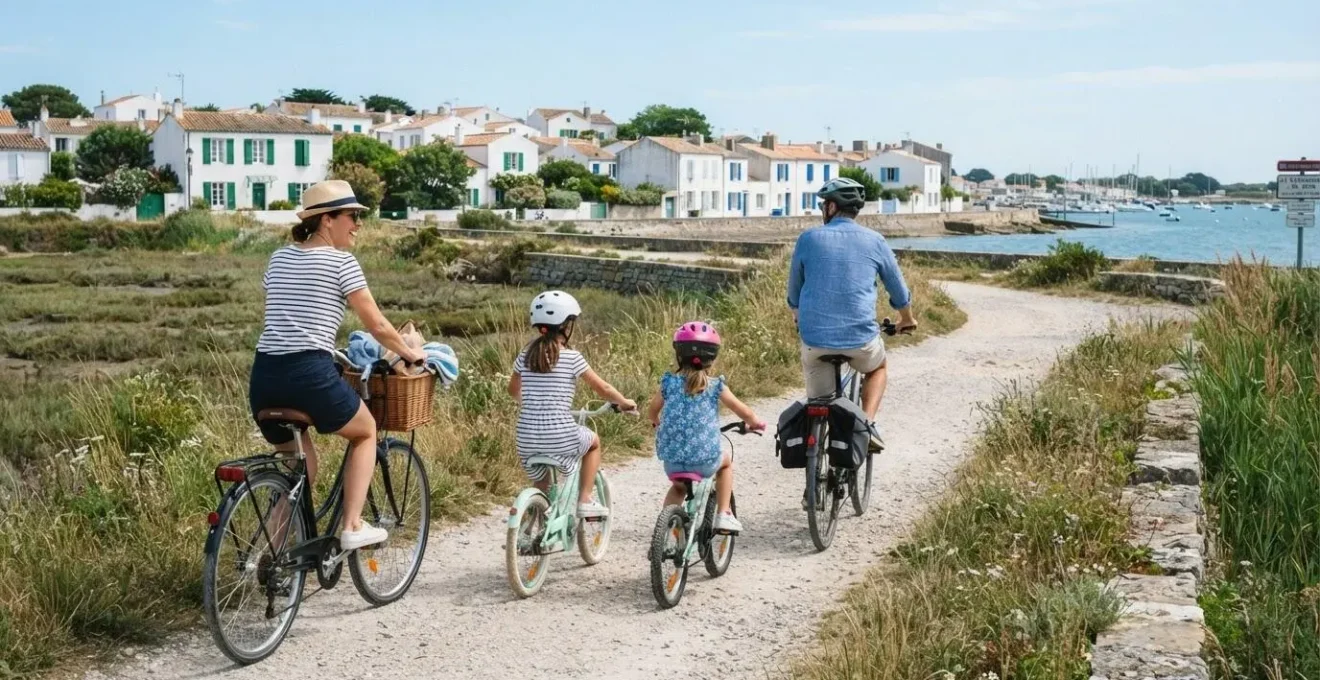
The island’s compact geography becomes an asset rather than limitation. Ten distinctive villages, each with its own market day and personality, sit within easy cycling distance. UNESCO Biosphere Reserve status has preserved the working salt marshes and oyster farms that give Île de Ré its economic authenticity—these aren’t museum pieces maintained for tourists, but functioning enterprises where you can watch salt harvesters at dawn or book tastings directly at waterfront cabanes ostréicoles.
Île de Ré’s approach to luxury is refreshingly unshowy. You won’t find gated communities or celebrity-spotting beach clubs. Instead, the island offers something rarer: luxury normalized into daily life. The morning baker in Saint-Martin produces croissants that would earn Parisian accolades. The village bistro in Ars-en-Ré serves line-caught fish with natural wine pairings. The Thursday market in La Flotte spreads across medieval streets with producers who’ll remember your preferences by your second visit.
This is where the full-service villa rental model shows its true advantage. Properties here typically include complimentary Rétais bicycles—the island’s signature transport—plus pre-stocked welcome amenities featuring local products, from fleur de sel harvested meters away to Cognac from nearby estates. More significantly, local concierge teams provide the insider access that transforms a pleasant holiday into genuine cultural immersion: which oyster farm offers private tastings, when the seasonal asparagus appears at which market, how to secure last-minute tables at perpetually-booked restaurants.
Families discover quickly why Île de Ré has become synonymous with stress-free luxury travel. The island’s extensive network of dedicated cycling paths creates car-free exploration connecting beaches, villages, and attractions with remarkable safety for children. The Atlantic provides gentler waves than Mediterranean alternatives, with supervised beaches and sailing schools designed for younger participants. Even the geography cooperates: the island’s flat terrain means eight-year-olds can cycle alongside adults without exhaustion-driven meltdowns.
What sets Île de Ré apart for luxury villa stays: The island combines bridge accessibility eliminating ferry logistics, UNESCO Biosphere protection ensuring preserved character, compact cycling-friendly geography spanning all ten villages, and established premium infrastructure built over decades rather than rushed to meet recent demand. Properties meeting luxury standards include heated pools despite Atlantic climate, mature gardens with established shade trees, and proximity to both beaches and village centers within cycling distance.
The island’s culinary scene punches well above its size. Beyond the expected seafood excellence—though the oysters here genuinely rival Brittany’s finest—Île de Ré has attracted chefs who’ve traded Parisian pressure for island quality of life without compromising standards. Private chef services source ingredients from island producers, creating hyperlocal menus reflecting what appeared at that morning’s market.
Provence: Timeless elegance in lavender country
If Île de Ré represents luxury distilled to coastal essentials, Provence offers the opposite expression: abundance. Abundance of history stacked in medieval villages, abundance of produce overflowing market stalls, abundance of wine estates where tasting rooms welcome visitors like distant cousins rather than transactions.
The Provençal villa experience differs fundamentally from coastal alternatives. Here, the property itself becomes your base for cultural foraging rather than a beach retreat. Days structure around market schedules and vineyard appointments rather than tide tables, following agricultural cycles—asparagus in spring, cherries in early summer, figs in August, grape harvest in September—rather than holiday calendar conventions.
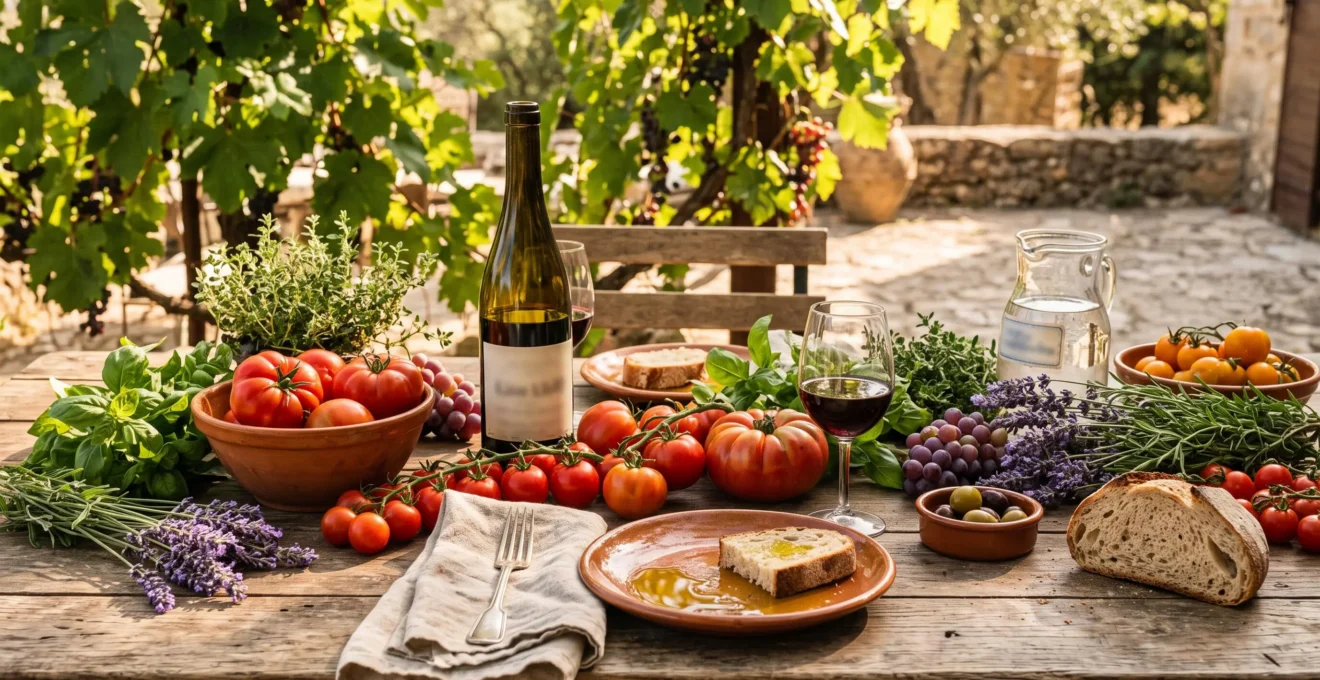
The challenge with Provence is separating marketed mythology from lived reality. Yes, lavender fields exist and photograph beautifully in late June through mid-July. But reducing Provence to purple rows misses the region’s genuine appeal for luxury villa stays: the opportunity to participate temporarily in a functioning agricultural and cultural ecosystem rather than observe it from tour bus windows.
Premium villas here—whether restored mas farmhouses or contemporary bastides—typically occupy vineyard edges or village outskirts. This positioning isn’t accidental. It places you within walking or cycling distance of village squares where locals play pétanque at sunset, boulangeries where morning routines begin, and weekly markets that function as social infrastructure as much as commerce. The luxury isn’t isolation but integration at a level impossible in hotels or tourist zones.
Provence’s villa advantage becomes particularly evident when comparing it to the nearby Côte d’Azur. The Riviera offers display luxury: yacht-watching, designer boutiques, celebrity-chef restaurants with month-long wait lists. Provence counters with lived luxury: private wine tastings at estates that don’t advertise, truffle-hunting excursions arranged through personal connections, ceramics workshops with potters whose families have worked the same clay for generations. One approach isn’t superior—they’re fundamentally different vacation philosophies.
The Provençal culinary tradition makes this region particularly suited to the private chef services that distinguish luxury villa holidays from simple property rentals. The Mediterranean diet here isn’t a cookbook concept but daily practice, visible in market stalls overflowing with tomatoes in eight varieties, zucchini blossoms sold within hours of picking, and fishmongers displaying catch from early-morning Marseille boats.
Private chefs working the Provence villa circuit source ingredients with an intensity that would be impractical for restaurant operations. They’ll build entire menus around what appeared unexpectedly at Saint-Rémy’s Wednesday market, negotiate with farmers for just-harvested produce, and incorporate hyperlocal specialties—olive oils from specific groves, goat cheeses from named herds—that never reach commercial distribution.
The villa setting allows culinary experiences impossible in restaurant formats. Cooking classes using your own kitchen and garden herbs. Multi-course lunches served outdoors across entire afternoons, respecting the Provençal understanding that meals are social events rather than fuel stops. Wine tastings where cases can be shipped home rather than limited to by-the-glass restaurant pours. This is where the villa rental model transcends simple accommodation to become genuine cultural access.
The remaining gems: Dordogne valleys and Atlantic coastlines
Beyond the established luxury circuits of island retreats and Provençal mas, France’s lesser-celebrated regions reward travelers willing to venture off the conventional itinerary. These destinations appeal not through marketing budgets but through substance: landscapes shaped by centuries rather than tourism trends, and culinary traditions maintained by necessity rather than nostalgia.
The assumption that luxury requires Mediterranean proximity crumbles when you examine France’s less obvious premium destinations. The Dordogne and Basque Coast attract travelers seeking something beyond the conventional luxury travel circuit—not because these regions lack sophistication, but because they offer exclusivity through obscurity rather than price points.
The Dordogne valley presents a medieval landscape that feels suspended between centuries. Château fortresses crown limestone cliffs, prehistoric cave paintings survive in protected grottos, and riverside villages maintain honey-colored stone architecture virtually unchanged since Renaissance commerce flowed past their ports. The luxury here is temporal rather than material: you’re inhabiting landscapes and rhythms that predate modern tourism entirely.
Villa properties in the Dordogne tend toward restored stone farmhouses with acreage measured in hectares rather than square meters. Private pools overlook valley vistas instead of beaches. Days structure around market towns like Sarlat-la-Canéda, where Saturday’s market spreads across an entire medieval quarter, or château visits that culminate in cellars where noble families still personally conduct wine tastings.
The Basque Coast offers a completely different luxury expression: athletic rather than contemplative. This is France’s serious surfing territory, where Atlantic swells attract dedicated wave-riders to spots like Biarritz and Hossegor. But the Basque region delivers more than beach culture. The nearby Pyrenees provide mountain hiking within an hour’s drive. The distinctive Basque culinary tradition—pintxos culture, sheep’s milk cheese, Espelette pepper, Irouléguy wines—represents a completely separate gastronomic identity within France.
Selecting between these four regions requires evaluating practical criteria beyond Instagram appeal. The comparison below structures decision factors across atmosphere, ideal traveler profiles, signature experiences, crowd density, and beach access:
Regional comparison data compiled from official tourism boards and verified through local expert consultation, February 2026.
| Region | Atmosphere & Vibe | Ideal Traveler Profile | Signature Experiences | July-August Crowd Factor | Beach Access |
|---|---|---|---|---|---|
| Île de Ré | Refined Atlantic island relaxation, village-hopping culture | Families with children, multi-generational groups, cyclists, seafood enthusiasts | Oyster farm visits, car-free cycling network, salt marsh tours, working port villages | Moderate (protected by bridge capacity, but popular with French nationals) | Multiple beaches within easy cycle, Atlantic surf beaches and calm bay options |
| Provence | Cultural immersion, agricultural landscapes, artistic heritage | Culinary travelers, wine enthusiasts, history seekers, couples, art lovers | Village markets, vineyard tastings, lavender routes, medieval hill towns, Roman ruins | High (iconic status draws international crowds, especially Luberon villages) | Limited (Mediterranean coast one to two hours depending on villa location) |
| Dordogne | Medieval tranquility, river valley serenity, gastronomic focus | Tranquility seekers, foodies, history enthusiasts, countryside lovers, château explorers | Château visits, prehistoric caves, truffle markets, canoeing Dordogne River, walnut orchards | Low (established but not overwhelmed, preserves authentic character) | None (river swimming and canoeing replace beach culture) |
| Basque Coast | Athletic energy, distinctive Basque culture, mountain-meets-ocean | Active travelers, surfers, hikers, culinary adventurers, cultural explorers | Surfing lessons, Pyrenees hiking, Basque villages, pintxos trails, pelota matches | Moderate to high (Biarritz attracts crowds, dispersed across wider coastal area) | Exceptional Atlantic surf beaches, family-friendly bays, dramatic coastal cliffs |
The common thread connecting these lesser-celebrated regions is their appeal to travelers who’ve graduated beyond bucket-list tourism. These are second-or-third-visit France destinations, chosen by people who’ve already photographed the Eiffel Tower and walked Cannes beaches, now seeking substance over status.
How to choose your ideal French region this summer?
Regional selection ultimately hinges on understanding what you value most in a villa holiday. The following decision framework helps match vacation priorities to destinations that deliver them authentically.
- Question 1: What’s your primary vacation driver—beach access, cultural immersion, or countryside tranquility?
Beach priority: Île de Ré offers the most refined beach-and-village balance, while Basque Coast delivers athletic beach culture with mountain access. Provence provides limited beach proximity.
Cultural immersion: Provence leads for food-and-wine focus with market-driven experiences. Basque Coast offers distinctive cultural identity. Dordogne provides historical depth.
Countryside escape: Dordogne delivers genuine rural tranquility with minimal tourist saturation. Provence offers agricultural landscapes with higher visitor traffic.
- Question 2: Are you traveling with children, as a couple, or with multi-generational family?
With children: Île de Ré’s cycling infrastructure and supervised beaches make family logistics effortless. Basque Coast appeals to active older children and teens.
Couples: Provence romantic imagery is earned—vineyard sunsets and village squares deliver. Dordogne offers intimate countryside seclusion.
Multi-generational: Île de Ré accommodates diverse age groups and mobility levels best, with activities ranging from gentle cycling to cultural excursions within compact geography.
- Question 3: How important is avoiding peak-season tourist density?
Crowd-averse: Dordogne maintains the lowest tourist saturation. Basque Coast disperses crowds across wider geography. Provence and Île de Ré both attract significant July-August traffic but offer privacy within villa properties.
Crowd-tolerant: All regions function well if your villa provides retreat space. Provence and Île de Ré deliver the most established luxury infrastructure precisely because popularity has driven investment.
Beyond regional selection, understanding what defines a genuinely luxury villa rental versus standard vacation property prevents disappointment. France’s new rental regulations, detailed in Service-Public.fr‘s January 2025 guidance, now require all tourist rentals to register by May 20, 2026, and meet minimum energy performance standards. These regulations actually benefit luxury travelers by forcing substandard properties out of the market and ensuring transparent property disclosure.
The premium villa segment operates well above these baseline requirements. Quality standards to verify include minimum four bedrooms with ensuite bathrooms, private heated pools maintained to resort specifications, daily or mid-stay housekeeping depending on length, premium linen service using hotel-grade materials, and responsive 24-hour concierge service with demonstrated local expertise rather than call-center scripts.
- Verify heated pool status and operating season—essential even in southern France where temperatures fluctuate significantly
- Confirm minimum bedroom count with ensuite bathrooms matches your party size and privacy needs
- Clarify what’s included in base price versus optional extras—housekeeping, linens, welcome provisions, bicycles
- Ask about concierge availability and response time guarantees, not just whether service exists
- Request specific examples of local recommendations the agency provides—generic guidebook suggestions signal weak local expertise
- Understand cancellation policies and whether travel insurance covers your deposit in case of unforeseen changes
- Check proximity to village centers or beaches matches your mobility and transportation preferences
- Verify property photos are actual villa images, not generic stock photography or sister property substitutions
The real luxury in French villa holidays isn’t thread count or pool dimensions—though both matter. It’s waking to espresso your housekeeper prepared unprompted, finding your concierge secured impossible reservations, discovering your chef adjusted tonight’s menu using this morning’s market arrivals. It’s the profound relaxation from space, privacy, and personalized service operating invisibly around you.
Rather than defaulting to conventional luxury circuits, match your villa destination to what you actually value in a summer escape. Families seeking effortless sophistication gravitate toward Île de Ré’s cycling infrastructure and protected island character. Travelers prioritizing cultural depth over beach proximity find Provence’s culinary immersion and market-driven experiences irreplaceable. Those escaping international tourism entirely discover the Dordogne’s medieval valleys reward patience with genuine authenticity. And active luxury seekers recognize the Basque Coast as France’s answer to combining athletic pursuits with distinctive regional identity. The common requirement: specialists who maintain year-round local presence, direct property relationships, and understand that luxury service means anticipating needs before guests articulate them.