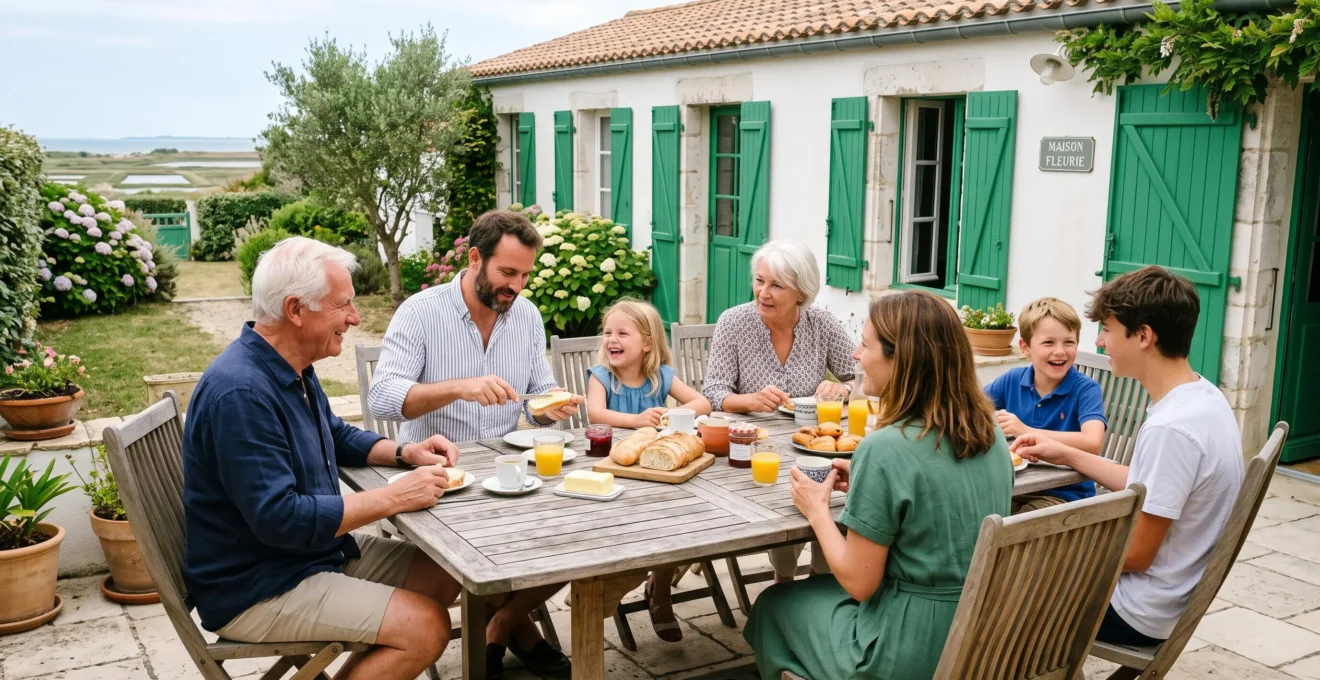
Planning a villa stay on Île de Ré for a large group involves more than browsing pretty photos. With weekly rates ranging from $1,538 to $11,452 depending on capacity and season, and ten distinct villages spread across this 85 km² Atlantic island, the decision-making process can quickly become overwhelming. The most common mistake families make is choosing a villa based purely on aesthetics, only to discover during their stay that the nearest beach requires a 20-minute drive or that two bathrooms for twelve guests creates daily friction. This guide breaks down the booking process into five actionable steps, helping you coordinate accommodation for 8-12 people without logistical stress or budget surprises.
Your 5-step villa booking roadmap for Île de Ré:
- Choose your village based on group profile — families with young children benefit from La Flotte or Le Bois-Plage (beach proximity, Blue Flag status), while adults seeking charm gravitate toward Ars-en-Ré or Saint-Martin-de-Ré
- Filter for must-have amenities beyond the pool — prioritize bathroom count (minimum 2 for groups of 8), parking spaces for multiple vehicles, and outdoor dining capacity matching your group size
- Book 6-9 months ahead during planning phase to secure optimal rates and full villa selection across all villages
- Plan transport logistics early — nearest access point is La Rochelle (30 km from the island bridge), car rental essential for grocery runs with large groups
- Prepare your pre-arrival checklist — coordinate grocery delivery, confirm check-in procedures, download offline cycling maps for the island’s 138 km of paths
Step 1: Choose your ideal village on Île de Ré
The island officially comprises ten villages spread across 85 km², and les chiffres clés INSEE de l’Île de Ré confirment que the population of 17,961 inhabitants creates a density of 210.5 people per km². According to Destination Île de Ré, the official tourist office, these communities range from bustling Saint-Martin-de-Ré with its UNESCO-listed Vauban fortifications to the tranquil western tip of Les Portes-en-Ré bordering the Lilleau des Niges nature reserve. Rather than reading ten separate village descriptions, focus on the criteria that actually matter for group stays.
A typical scenario: a multigenerational family books a stunning villa in Saint-Clément-des-Baleines for its ocean views and lighthouse. Days later, frustration builds as every restaurant or market trip requires a 15-kilometer round trip, and grandparents with limited mobility struggle with the remote location.
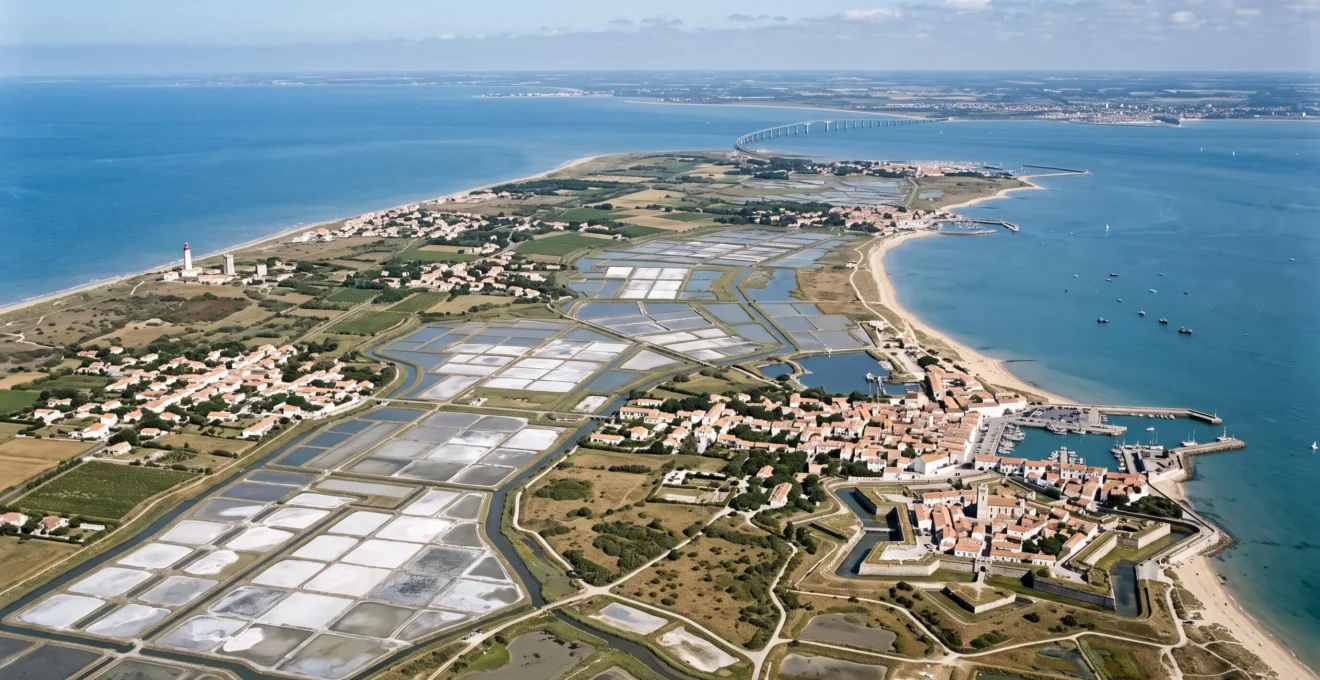
Families with children under 12 typically find the best balance in La Flotte or Le Bois-Plage-en-Ré. Both villages hold the prestigious “Plus Beaux Villages de France” label (La Flotte) or Blue Flag beach certification (Le Bois-Plage), and Le Bois-Plage offers five continuous kilometers of family-friendly beaches. For adults-only groups or those prioritizing evening atmosphere, Saint-Martin-de-Ré delivers the highest concentration of restaurants and boutiques, though expect corresponding crowds during July and August.
If your group values cycling exploration, the strategic choice becomes La Couarde-sur-Mer, positioned at a central point along the island’s 138 km of cycling paths. The village provides direct access to both coastal routes and inland trails through the salt marshes, with the port of Chenal de Goisil serving as a picturesque departure point. When exploring available properties, you can learn more about villas through detailed search filters that allow sorting by village location and specific proximity criteria.
- Families with children under 10:
Prioritize La Flotte (labeled “Plus Beaux Villages”) or Le Bois-Plage-en-Ré (Blue Flag beaches, shallow waters, playgrounds). Both offer walking-distance beach access and family services.
- Adults-only groups or teenagers:
Saint-Martin-de-Ré provides the highest concentration of evening restaurants and cultural activities (Vauban fortifications, harbor atmosphere). Ars-en-Ré offers quieter charm with cobblestone streets and artisan shops.
- Active cycling enthusiasts:
La Couarde-sur-Mer or Loix position you centrally along the cycling network, with Loix earning the Cittaslow label and providing immersive access to working salt marshes.
- Nature-focused or tranquility-seeking groups:
Les Portes-en-Ré (westernmost village, adjacent to Lilleau des Niges nature reserve) or Saint-Clément-des-Baleines (lighthouse access, wild beaches) sacrifice convenience for preserved landscapes.
Step 2: Filter for amenities that matter with large groups
Popular belief suggests that a private pool tops the priority list for luxury villa rentals. In practice, experienced renters know that bathroom count and adequate parking create far more impact on daily group harmony than any outdoor feature. Consider the scenario of three families sharing a stunning eight-bedroom property with a magnificent pool but only two bathrooms — morning routines become battlegrounds, and the villa’s beauty can’t compensate for structural friction.
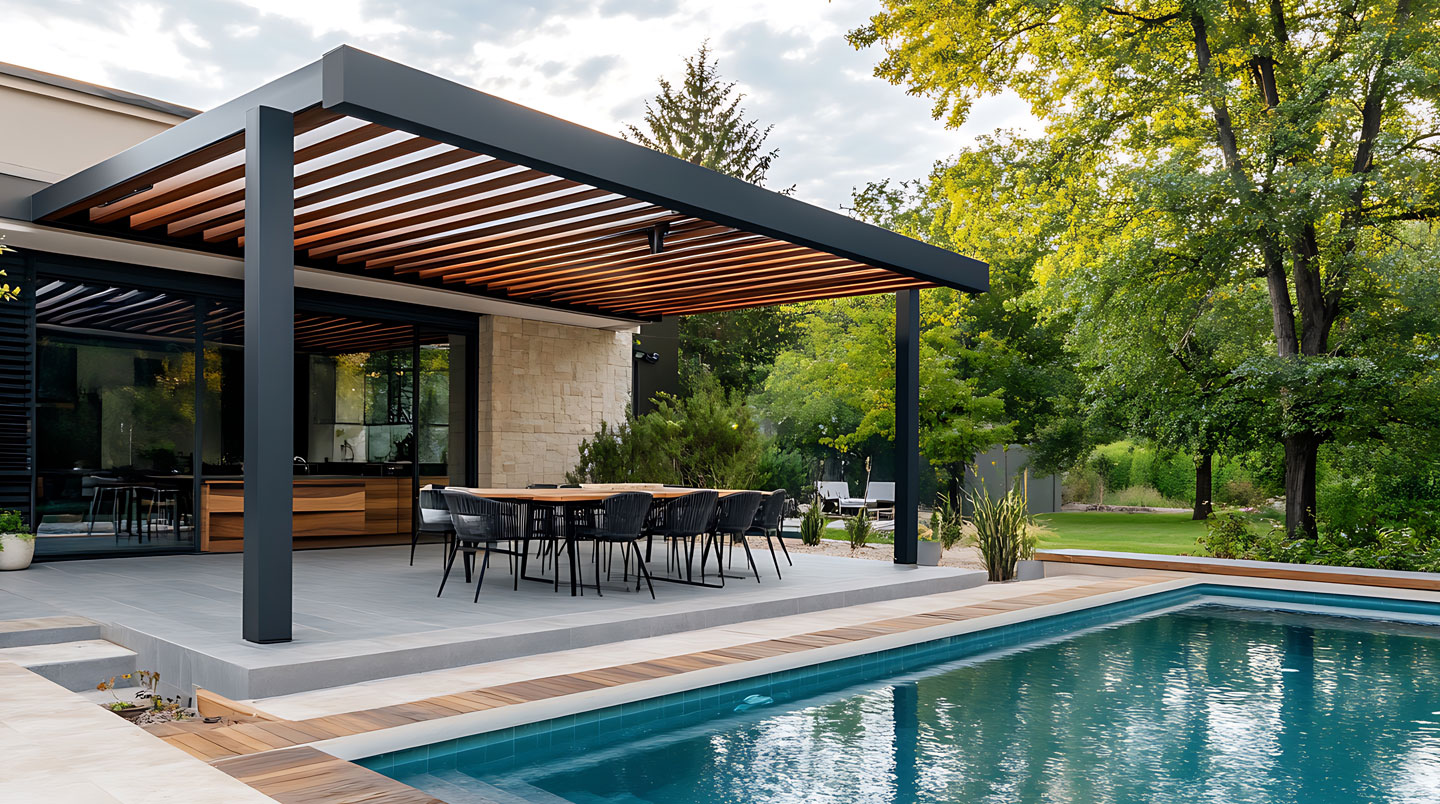
For groups of 8-12 guests, the baseline requirement shifts to a minimum of three full bathrooms with showers. This calculation follows a practical ratio: one bathroom per four guests prevents queuing during peak morning and evening hours. Parking presents another frequently underestimated constraint — if your group arrives in three separate vehicles (common when coordinating multiple families), verify the property provides secure parking for all cars rather than assuming street parking availability.
The outdoor dining capacity deserves equal scrutiny. Villas marketed as “sleeps 10” sometimes feature outdoor tables seating only six, forcing meal logistics into awkward indoor-outdoor splits. When filtering search results, look for properties explicitly stating “outdoor dining for 10+” or examine photos showing table configurations. Covered terraces become particularly valuable during the island’s occasional summer rain showers, allowing meals to proceed regardless of weather.
Essential amenity checklist for groups of 8-12: Verify three or more full bathrooms (not just toilets), parking for minimum two vehicles, outdoor dining table seating your full group count, at least one bedroom on ground floor (accessibility for elderly or mobility-limited guests), and washing machine capacity (standard machines struggle with towels and linens for 10+ people over a week).
Pool features matter less than pool safety for families. Gates, alarms, or covers become non-negotiable when traveling with children under 8. Kitchen equipment — double ovens or sufficiently large refrigerators — matters for large groups.
Step 3: Book at the right time to balance rates and availability
The conventional wisdom of “book last-minute for deals” works in many vacation markets but fails spectacularly on Île de Ré. The island benefits from nearly 2,600 hours of sunshine annually, comparable to Corsica, creating sustained high demand from May through September with peak rates concentrated in July and August.
The optimal booking window sits between six and nine months before arrival. Properties matching specific criteria disappear progressively as summer approaches, with late bookers paying 40% premiums over advance reservations.
138 km
Total length of cycling paths covering Île de Ré, creating car-free exploration options once you arrive
The rate structure for villa rentals on Île de Ré follows weekly increments, typically running Saturday to Saturday during high season. This standardization helps coordinate arrival logistics but reduces flexibility — you cannot easily book partial weeks from June through August. Shoulder seasons (May, early June, September) offer more flexible booking terms and rates approximately 30-35% below peak July pricing, though availability of the largest villas (10+ guests) remains competitive even during these periods.
Cancellation policies vary significantly by property and booking platform. Some villas enforce strict no-refund terms once booking confirmation processes, while others offer moderate flexibility with partial refunds up to 30 days before arrival. When coordinating multiple families, this policy becomes critical — if one family cancels, can the remaining group afford the full villa cost, or do you need flexible terms allowing proportional refunds?
- Full selection across all ten villages and property types
- Lower rates (standard season pricing before premium surcharges apply)
- Time to coordinate group availability and cost-sharing logistics
- Severely limited villa choice, especially for groups exceeding 8 guests
- Premium pricing with rates potentially 35-40% higher than advance bookings
- Risk of settling for properties not matching amenity requirements
Step 4: Plan your arrival and transport on the island
Île de Ré connects to mainland France via a 2.9-kilometer bridge from La Rochelle, eliminating ferry logistics but introducing toll considerations. The nearest airport sits in La Rochelle itself, positioned approximately 30 kilometers from the bridge access point. International travelers typically route through Paris Charles de Gaulle, then either take a domestic flight to La Rochelle (limited frequency) or rent a car for the four-hour drive southwest.
Car rental becomes non-negotiable for villa stays housing large groups. While the island’s cycling infrastructure is exceptional — the official Accueil Vélo network spans 138 km of dedicated paths across flat terrain suitable for all skill levels — practical reality intervenes when you need to transport groceries for twelve people or reach a beach five kilometers from your villa with young children and equipment.
Experienced villa renters typically arrange for two vehicles when groups exceed eight guests. This redundancy solves inevitable scenarios where half the group wants an early beach departure while others prefer a leisurely morning, or when grocery shopping requires splitting into efficient teams. The bridge toll applies to motorized vehicles (cyclists cross free), with costs varying by season — verify current rates during booking planning, as these fees accumulate across a week-long stay with multiple crossings for excursions to La Rochelle or mainland attractions.
Transport planning sequence: Book car rental simultaneously with villa confirmation (6-9 months ahead for competitive rates), verify villa provides adequate parking for your vehicle count, download offline maps of the cycling network before arrival (mobile coverage can be inconsistent in remote island areas), and research bike rental options if you want cycling exploration without transporting bicycles from mainland.
The island’s flat topography makes cycling genuinely accessible. The six themed cycling routes guide exploration through coastal paths, salt marsh trails, and forest loops.
Step 5: Prepare your pre-arrival checklist
What’s the detail that most frequently disrupts villa vacations during the first 24 hours? Running out of basic provisions on a Sunday when French commerce traditions shut down most grocery stores. Unlike hotel stays where reception desks solve problems, villa rentals place full responsibility on guests to anticipate needs and coordinate solutions independently.
The island supports several grocery delivery services, though availability and minimum order requirements fluctuate seasonally. Ordering staples (bottled water, coffee, breakfast basics, fresh bread) for delivery on your arrival day eliminates the stress of mandatory shopping runs after long travel.

Check-in procedures vary by property. Some villas use lockbox systems with codes sent 48 hours before arrival; others require in-person key collection. Verify the exact check-in time and location to avoid late-arrival complications.
- 3 months before arrival: Confirm final booking details, verify amenity list matches group requirements, coordinate cost-sharing payment schedule among families
- 6 weeks before: Reserve car rental, research bike rental options if desired, review villa house rules regarding noise restrictions or pool usage hours
- 2 weeks before: Pre-order grocery delivery for arrival day, download offline cycling maps and village guides, confirm exact check-in procedure and key collection location
- 48 hours before: Print or save digitally emergency contact numbers (property manager, local doctor, nearest pharmacy), verify weather forecast and adjust packing accordingly
- On arrival day: Photograph villa condition before unpacking (document any pre-existing damage to avoid deposit disputes), locate circuit breakers and water shutoffs, test all appliances
Market days vary by village — Saint-Martin hosts the island’s largest market on Tuesdays and Fridays, while smaller villages operate markets on different weekdays. Planning your first full day around market access provides fresh local produce and introduces you to the island’s salt marsh products and oyster specialties. The tourism office publishes a complete market schedule, worth downloading before arrival to coordinate meal planning.
Villa properties handling groups of 8-12 guests generate substantial laundry volume over a week. Verify whether linens and towels are provided (most include these) and whether mid-stay linen changes are available for longer bookings. Washing machines appear standard, but dryer availability varies — important consideration if you’re traveling with young children generating multiple clothing changes daily.
Do we need a car on Île de Ré for a villa stay?
Yes, for groups of 8-12 guests. While the island offers 138 km of excellent cycling paths across flat terrain, grocery shopping for large groups and transporting equipment or young children requires at least one vehicle. The cycling network is perfect for daily exploration once you’re settled, but initial provisioning and flexibility demand car access.
What costs beyond the villa rate should we budget for?
Plan for cleaning fees (typically $150-300 depending on villa size), French tourist tax (taxe de séjour, approximately $1-3 per person per night), bridge toll for vehicles, grocery costs, and any activities or bike rentals. Total additional costs for a week-long stay with 10 guests average $500-800 beyond the base rental rate.
Can multiple families split the payment for one villa booking?
Booking platforms typically require one person to complete the transaction and payment. That individual then coordinates private reimbursement from other families. Some platforms offer split-payment options during checkout — verify availability during the booking process if this simplifies your group’s financial coordination.
Which villages work best for families with young children?
La Flotte (labeled “Plus Beaux Villages de France”) and Le Bois-Plage-en-Ré (Blue Flag beach certification) consistently rank highest for families. Both offer shallow, calm beaches within walking or short cycling distance, playgrounds, and family-oriented services. Le Bois-Plage provides five continuous kilometers of sandy beach, ideal for children ages 2-10.
What happens if we need to cancel our villa booking?
Cancellation policies vary by individual property and can range from flexible (full refund up to 30 days before) to strict (no refund after booking confirmation). Always verify the specific policy before completing payment. For expensive bookings or uncertain group attendance, consider travel insurance covering cancellation scenarios beyond the property’s standard terms.