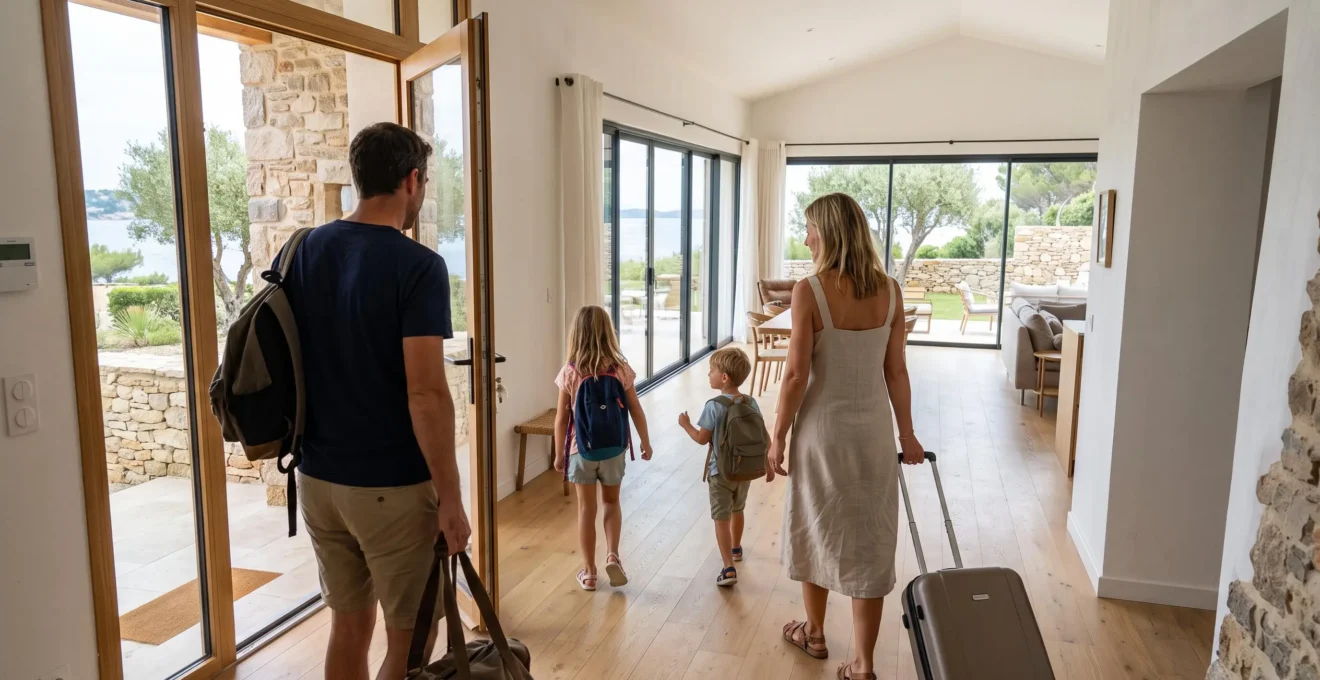
The short-term rental market continues to expand rapidly, driven by growing demand for unique and premium holiday experiences. Yet this growth masks a persistent challenge: the gap between appealing marketing photos and the actual quality of properties. When considering a luxury villa in France’s coastal regions — where weekly rates can vary significantly depending on location, amenities and season — distinguishing genuinely high-quality properties from overpriced accommodations becomes essential. The difference often lies not in price alone, but in tangible indicators of quality that many booking platforms fail to highlight clearly.
This guide addresses that evaluation challenge systematically. Rather than relying on instinct or trusting polished marketing claims, you’ll learn verifiable criteria that distinguish genuinely high-quality properties from those that simply photograph well.
The framework applies particularly to luxury villa bookings accommodating 8-14 people, where infrastructure inadequacies — insufficient bathrooms, vague amenity specifications, or absent management support — become immediately apparent and can derail an expensive family holiday.
What truly defines quality in luxury vacation rentals?
Most travellers instinctively equate quality with visual appeal and price point. A villa listing at €5,000 per week with professional photography must be superior to a €1,200 property with amateur snapshots, right? Market evidence suggests otherwise. The fundamental misconception is treating quality as a static attribute inherent to the property itself, when it’s actually the outcome of three dynamic factors: property management systems, maintenance consistency, and transparency in representation.
A rigorous quality assessment of holiday rentals reveals that guest satisfaction depends on far more than the property itself. Evaluation criteria typically cover several key areas, including bedrooms, bathrooms, cleanliness, shared spaces, kitchens, outdoor areas and the efficiency of property management. A significant part of these factors relates to operational standards rather than the inherent characteristics of the accommodation. A heritage farmhouse with original stone walls and a heated pool can disappoint guests if management lacks organisation or cleaning procedures are inconsistent. Conversely, a more modest three-bedroom house with attentive professional management can provide a far better overall experience.
Professional property management with documented maintenance schedules and 24-hour support systems, comprehensive visual documentation showing all living spaces rather than selective highlights, and transparent pricing specifications including seasonal variations, capacity limits, and complete cost breakdowns.
This framework contradicts the luxury rental industry’s marketing emphasis on heritage status, architectural pedigree, or proximity to landmarks. While those features certainly enhance appeal, they guarantee nothing about the guest experience you’ll actually receive. A classified historic property might suffer from deferred maintenance masked by atmospheric photography. A beachfront location means little if the villa’s “sea view” is visible only from a single upstairs window at an awkward angle.
Quality assessment must scrutinise operational evidence rather than static attributes. Does the listing provide maintenance records for premium amenities? Can you verify the property management company’s credentials? Are specifications precise — stating pool heating periods and temperatures instead of simply “heated pool”?

The 7 non-negotiable criteria for evaluating rental quality
Translating quality principles into practical evaluation requires a systematic approach. The following seven criteria represent the minimum verification standard for luxury vacation rentals, particularly those accommodating larger groups of 8-14 people where infrastructure inadequacies become immediately apparent.
First, professional property management credentials matter more than ownership structure. The holiday rental sector increasingly differentiates between occasional private landlords and experienced professional operators. Beyond the ownership model, the quality of management, compliance with regulations and ability to deliver consistent guest services have become key indicators of a reliable and high-quality rental experience.
For family holidays in France, choosing where to stay is just as important as selecting the destination itself. Families looking to Book a high-end villa for a family holiday in France should prioritise established management companies that maintain local teams, document their safety compliance, and provide reliable emergency contact systems. Professional operators offer greater peace of mind by ensuring regular property checks, rapid assistance and consistent service standards throughout the stay. They typically acknowledge issues within two hours and can coordinate immediate solutions, while private owners may sometimes be unreachable for days, leaving guests without effective support when unexpected problems arise.
Second, bathroom-to-guest ratios reveal capacity planning competence. Industry practice suggests a minimum of one full bathroom per four guests for comfortable large-group accommodation. A villa marketed for 12 people with only two bathrooms indicates either unrealistic capacity claims or indifference to guest comfort. Request explicit confirmation: How many toilets? How many showers? Are any bathrooms ensuite or all shared?
Third, amenity specifications must be precise and seasonally explicit. “Heated pool” means nothing without temperature ranges and operational periods — quality operators specify “Pool heated to 26-28°C from May through September; unheated October-April.” Similarly, “air conditioning” should clarify coverage: full property, bedrooms only, or limited zones.
Fourth, comprehensive visual documentation is non-negotiable. Every bedroom should have multiple photos showing actual room dimensions, not just decorative vignettes. Bathrooms, kitchen storage, outdoor spaces, and access routes deserve equal coverage. If a listing shows the same picturesque living room from five angles but provides only one photo of a bedroom described as “spacious,” that’s a red flag.
Fifth, transparent pricing structures separate professional operators from opportunists. The quoted rate should include explicit breakdowns: base rent, cleaning fees, utilities, tourist taxes, linen provision, and equipment deposits, with no hidden fees sprung upon booking confirmation.
Sixth, heritage property claims require documentation. Authentic heritage properties can provide official classification numbers or renovation permits. Undocumented “historic manor” claims are marketing embellishment, not verified fact.
Seventh, review pattern analysis reveals more than aggregate ratings. A 4.7-star average tells you little; recent reviews mentioning specific amenities — “pool was indeed heated to stated temperature in June” or “management responded to dishwasher issue within 90 minutes” — provide actionable quality signals. Properties without reviews despite being listed for multiple years warrant extreme caution.
Quality assessment criteria vary significantly across accommodation categories. The following comparison demonstrates why luxury villas accommodating 8-14 people require more rigorous evaluation than standard holiday homes or apartments:
| Criterion | Luxury Villa (8-14 people) | Standard Holiday Home | Apartment Rental |
|---|---|---|---|
| Amenities Standard | Premium equipment (heated pool 26-28°C, spa facilities, full climate control, professional-grade BBQ) | Standard seasonal amenities (unheated pool, basic heating, simple outdoor cooking) | Limited shared facilities with variable maintenance |
| Management Model | Professional company with 24-hour support and documented protocols | Mixed professional or experienced private owner | Often private owner or small local agency |
| Pricing Transparency | Detailed itemised breakdown of all costs and seasonal adjustments | Generally clear base rate with some additional fees | Variable with potential for undisclosed charges |
| Capacity Infrastructure | Designed for large groups (minimum 3 bathrooms, dining for 12-14, multiple living zones) | Suitable for 4-8 people with proportional facilities | Typically limited to 2-6 occupants |
| Visual Documentation | Comprehensive coverage of all rooms from multiple angles, virtual tours common | Adequate coverage of main spaces, variable detail | Often highlights only, limited bathroom or storage photos |
Red flags that signal substandard properties
Consider a scenario that plays out with uncomfortable frequency: A family books what appears to be an ideal coastal villa for a May half-term break. The listing prominently features the heated pool, crucial for a holiday with young children in spring. Upon arrival, they discover the pool is indeed “heated” — but only from June through August, a detail buried in fine print they never saw. The temperature in mid-May hovers around 18°C, rendering the pool unusable for children and effectively eliminating the property’s main advertised feature.
This type of disappointment stems from specific warning signs most booking platforms don’t help you detect. The pattern begins with vague amenity descriptions creating wiggle room for disappointment. “Near beach” could mean a 40-minute walk rather than five minutes. “Sea views” might be visible only from one upstairs window. “Recently renovated” provides zero scope information — comprehensive restoration or merely fresh paint?
Critical warning signs requiring immediate clarification:
- Photos show only 2-3 rooms repeatedly from different angles, suggesting deliberate concealment of substandard spaces
- No verifiable property management company name or local contact details provided
- Pricing significantly below area averages without transparent explanation of why
- Heritage or renovation claims offered without supporting documentation or dated before/after photos
- Absence of guest reviews despite property listed for multiple seasons
Another pattern involves accessibility mismatch. A booking party searches for ground-floor bedroom access for elderly relatives. The listing shows a ground-floor master suite but omits the steep exterior stairs required to reach the main entrance, negating the benefit. Quality operators disclose such details upfront; those who don’t are careless or deceptive.
The review gap represents perhaps the most glaring red flag. Properties listed on major platforms for two or more years should accumulate dozens of reviews if they’re genuinely available for booking. Zero reviews or a suspiciously small number suggest either a fake listing, chronic quality problems that lead to review suppression requests, or a property that’s rarely actually available despite appearing in search results.
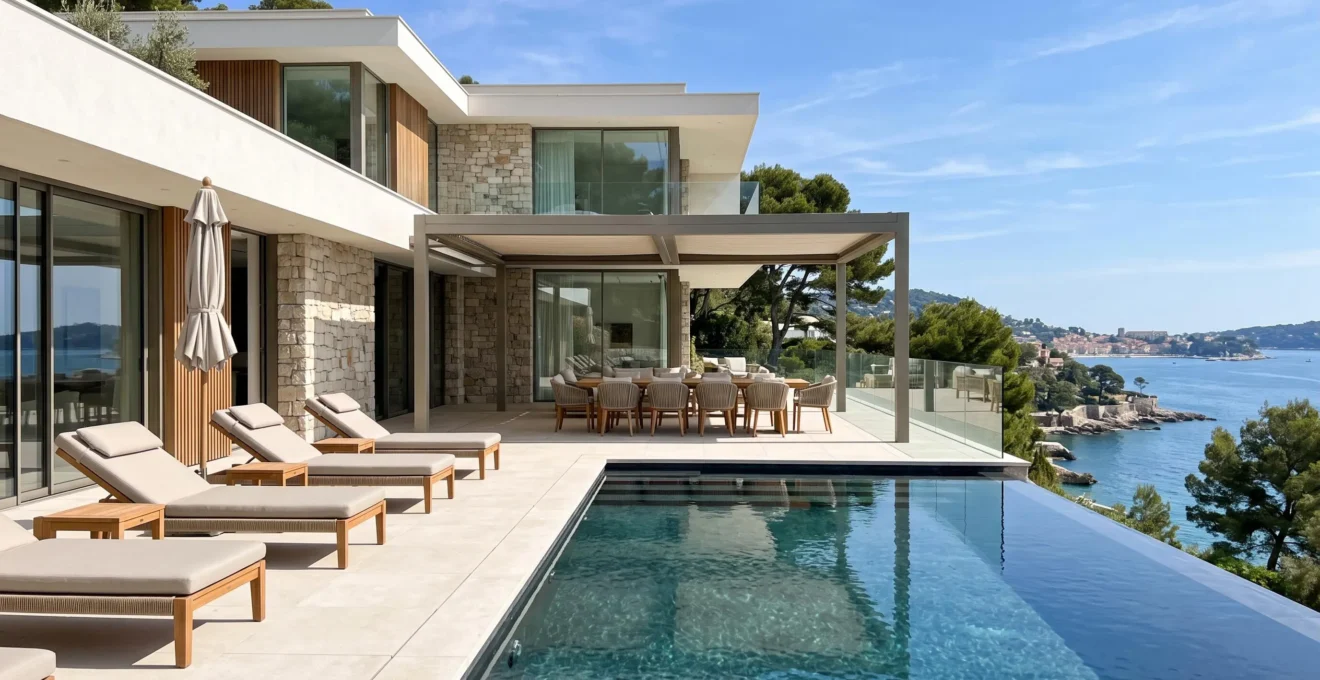
Price anomalies deserve scrutiny in both directions. A villa priced at €1,200 per week when comparable properties command €3,500 likely has undisclosed problems — restrictive cancellation terms, hidden fees, or quality issues. Conversely, exceptional pricing without exceptional features suggests you’re paying for location or marketing rather than quality. In France’s Île de Ré market, for instance, legitimate luxury villas accommodating 10-12 people are typically priced from approximately €2,800 to €7,000 weekly during peak season, according to industry rental platforms.
How to verify quality before committing to booking?
Think of pre-booking verification as property due diligence, analogous to the survey and inspection process when purchasing a home. You wouldn’t buy a house based solely on estate agent photos and descriptions; the same principle applies to luxury vacation rentals where you’re committing thousands of pounds for your family holiday.
The verification process should begin with targeted questions exposing gaps in listings. Don’t ask “Is the pool heated?” — that invites a simple yes. Instead: “What are the pool heating operational months and temperature range maintained?” Similarly, replace “Does it have sea views?” with “From which rooms is the sea visible, with photos from each angle?” Quality operators welcome such questions; problematic ones evade.
Request a virtual tour or recent video walkthrough for high-value bookings. Static photography — even when comprehensive — can be selectively edited and strategically lit. A live or recorded video tour reveals spatial relationships, natural lighting conditions, and details that photos routinely omit. If a property manager resists this reasonable request for a €4,000-6,000 booking, that resistance itself is valuable information.
Review analysis requires looking beyond aggregate ratings. A property with 15 reviews averaging 4.8 stars sounds excellent until you notice 12 reviews are from 2023, and three recent 2026 reviews mention maintenance issues or unresponsiveness. That pattern suggests declining standards — common when initial investment isn’t matched by ongoing maintenance.
- Request photos of all bedrooms and bathrooms, not just the most photogenic spaces
- Obtain written confirmation of amenity specifications: pool heating periods and temperatures, air conditioning coverage areas, spa operational status
- Verify property management credentials: registered company name, local office location, emergency contact protocols
- Confirm complete cost breakdown including cleaning fees, utilities, deposits, tourist taxes and any seasonal surcharges
- Analyse recent review patterns for recurring complaints or management response quality indicators
Test responsiveness as a proxy for likely service quality during your stay. Professional property managers typically acknowledge enquiries within 24 hours with substantive responses. If you’re waiting three days for vague answers to specific questions during the sales process, support during your actual stay is unlikely to improve. This simple communication test often reveals more about operational quality than any amount of marketing content.
Finally, clarify cancellation and refund terms before committing. Booking conditions should specify what happens if the property becomes unavailable or doesn’t match the description. Reputable operators provide clear policies; problematic ones bury restrictive terms in legal text.
How can I verify if listing photos accurately represent the property?
Request recent photos dated within the past six months showing all rooms from multiple angles, not just decorative highlights. Professional properties increasingly offer virtual tours or video walkthroughs that reveal spatial relationships static photography conceals. Cross-reference official listing images with user-uploaded photos in reviews to identify discrepancies. Wide-angle lenses are common in property photography, so ask for room dimensions in square metres for accurate space assessment.
What distinguishes professional property management from private ownership in terms of quality?
Professional management companies typically maintain structured maintenance schedules, provide 24-hour support systems, implement standardised quality protocols, and offer accountability through established company reputation. Private owners vary widely in competence and responsiveness. Key indicators include registered business credentials, documented safety compliance, multiple property portfolios, and verifiable emergency contact systems. Professional management doesn’t guarantee quality, but it establishes more consistent standards and clearer recourse options when issues arise.
Are premium-priced rentals worth the investment for family holidays?
Value depends on group size and feature utilisation. For families of 8-14 people, luxury villas often provide superior per-person economics compared to multiple hotel rooms, with added benefits of private pools, full kitchens enabling meal cost savings, spacious communal areas, and authentic local experiences. Calculate the total accommodation cost per person per night, factor in potential meal savings from self-catering, and assess whether you’ll genuinely use premium amenities like pools or spa facilities. Premium pricing becomes justified when amenities match your actual holiday patterns.